
Indoor vs. Outdoor Sauna: Which Is Right for You?
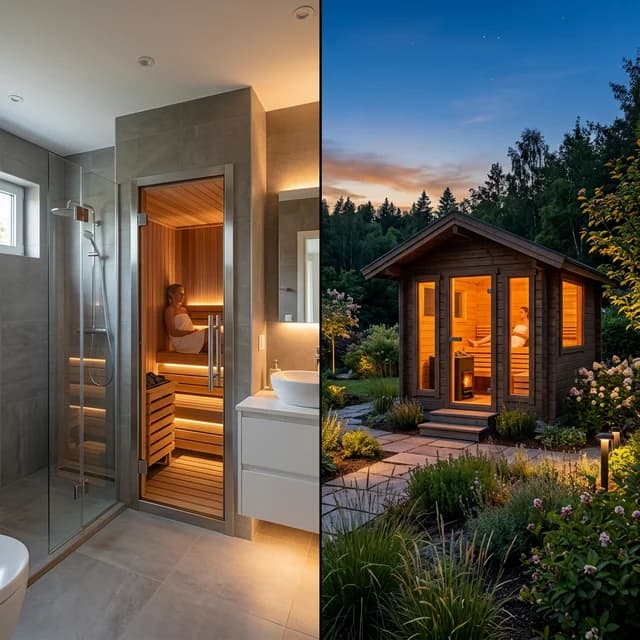
One of the first decisions our clients face is whether to build their sauna indoors or outdoors. Both options deliver an exceptional experience, but they differ significantly in construction approach, cost, maintenance, and lifestyle integration. Here's an honest comparison based on hundreds of projects we've completed across the Bay Area.
Indoor Saunas
Advantages
Indoor saunas offer unmatched convenience — no stepping outside in cold weather, no exposure to rain, and immediate access from your bathroom or bedroom. They integrate seamlessly into your existing home's infrastructure: electrical, plumbing, and ventilation are already nearby. Construction is typically faster because the surrounding structure (walls, roof, foundation) already exists.
Climate control is also simpler. An indoor sauna heats up faster because the ambient temperature starts higher, and heat loss through walls is minimal when they are properly insulated within a conditioned space.
Considerations
Indoor installations require careful moisture management. Improper vapor barriers can lead to condensation within wall cavities, eventually causing mold or structural damage. Ventilation must be engineered to exhaust humid air outside while maintaining negative pressure in the sauna room. Space is often the limiting factor — you need a minimum footprint of approximately 4' × 6' for a comfortable two-person sauna.
Outdoor Saunas
Advantages
Outdoor saunas offer a more immersive experience — stepping out of a 185 °F sauna into cool night air or a cold plunge pool is the authentic Nordic tradition. They can be designed as standalone structures with architectural presence, becoming a genuine focal point in your landscape. There is no moisture risk to your home's structure, and sizing is limited only by your yard.
Many of our clients pair their outdoor sauna with a cold plunge, an outdoor shower, or a lounge area, creating a complete wellness circuit that feels like a private spa retreat.
Considerations
Outdoor builds require their own foundation (typically a concrete slab or pier footings), dedicated electrical runs, and weatherproof construction using materials like Thermowood that can withstand rain, UV exposure, and temperature swings. Permitting requirements are usually more involved — Bay Area municipalities typically require setback compliance, and some HOAs have restrictions on accessory structures.
Cost Comparison
Indoor saunas generally cost 15–25% less than equivalent outdoor builds because they leverage existing structure. A premium indoor sauna for two to four people typically ranges from $15,000 to $35,000 installed. Outdoor saunas with a standalone structure, foundation, and dedicated electrical typically range from $25,000 to $60,000+, depending on size and features.
Our Advice
If convenience and daily use are your priorities, go indoor. If you have outdoor space and want the full ritual experience — heat, cold, fresh air, repeat — go outdoor. Either way, our free on-site consultation will help you evaluate your specific space, local codes, and lifestyle to make the right choice.
Ready to Build Your Dream Sauna?
Schedule a free consultation and let's discuss your project.